
Does Black Tea Block DHT? What Theaflavin Studies Show
Short answer: Black tea lowered circulating DHT in a mouse prostate-cancer experiment, while isolated theaflavin inhibited a DHT-producing enzyme in a separate laboratory study. These findings concern different experimental systems; neither measured scalp DHT or hair regrowth in people.
Where Did the “72% Lower DHT” Figure Come From?
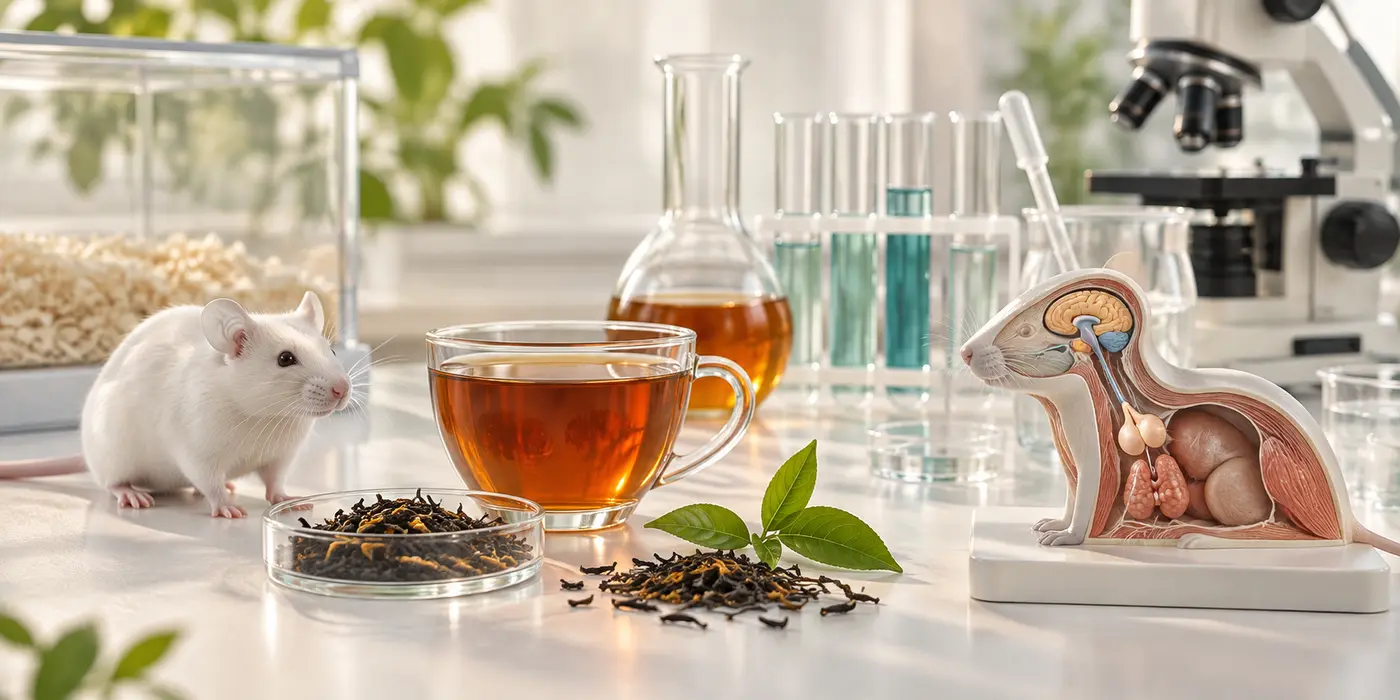
A 2003 experiment studied male mice implanted with human prostate-cancer cells. Black-tea infusion replaced their drinking water. Serum DHT was 72% lower than in controls (P < 0.05). The researchers measured circulating hormone, not scalp DHT or hair regrowth. Read the mouse study.
The number belongs to that particular experiment. It cannot serve as a prediction that a person drinking tea will lower DHT by the same percentage.
What Did Isolated Theaflavin Do to the DHT Enzyme?
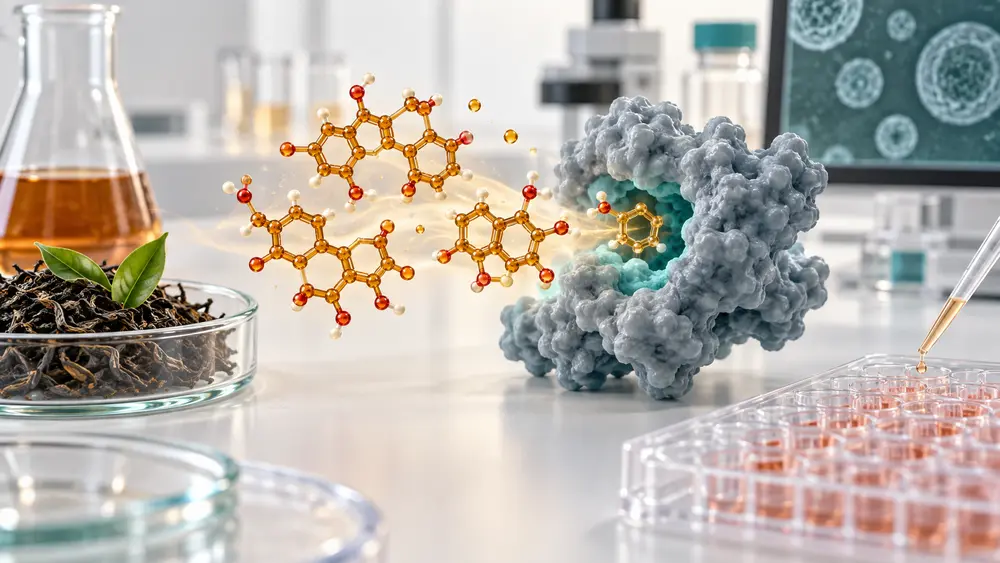
A 2004 study tested theaflavin-3,3′-digallate, abbreviated TF3, and another polyphenol called 5GG. Both inhibited 5-alpha-reductase in rat-liver microsomes—an enzyme-containing preparation made from cells. This enzyme converts testosterone into DHT.
In cultured human LNCaP prostate-cancer cells, the compounds also reduced androgen-receptor expression, androgen-induced PSA secretion, fatty-acid-synthase protein and cell growth. Those results concern androgen production and signaling in the experimental systems. They were not measurements from human scalp follicles. Read the theaflavin mechanism study.
Do Those Results Explain the Mouse Finding?
They offer a plausible connection, but do not complete it. The mouse-study authors could not identify which tea constituents caused the lower DHT. The later laboratory experiment shows an activity of isolated compounds; it does not establish their effective concentration in a human scalp after oral use.
Explore the related experiments: the mouse DHT comparison, topical fermented tea and mouse hair growth, and black tea and testosterone.
Related ingredient: Theaflavin is available in our shop. The ingredient connection does not mean this supplement was tested in these experiments.