
Does Procyanidin B2 Help Hair Growth? What the Research Shows
Short answer: Small human trials of topical procyanidin B2 reported gains in hair count and diameter. Oral Annurca apple extracts also produced encouraging measurements, but the main oral study did not compare treatment with a simultaneous placebo group. Those are different kinds of evidence—not interchangeable proof for any apple supplement.
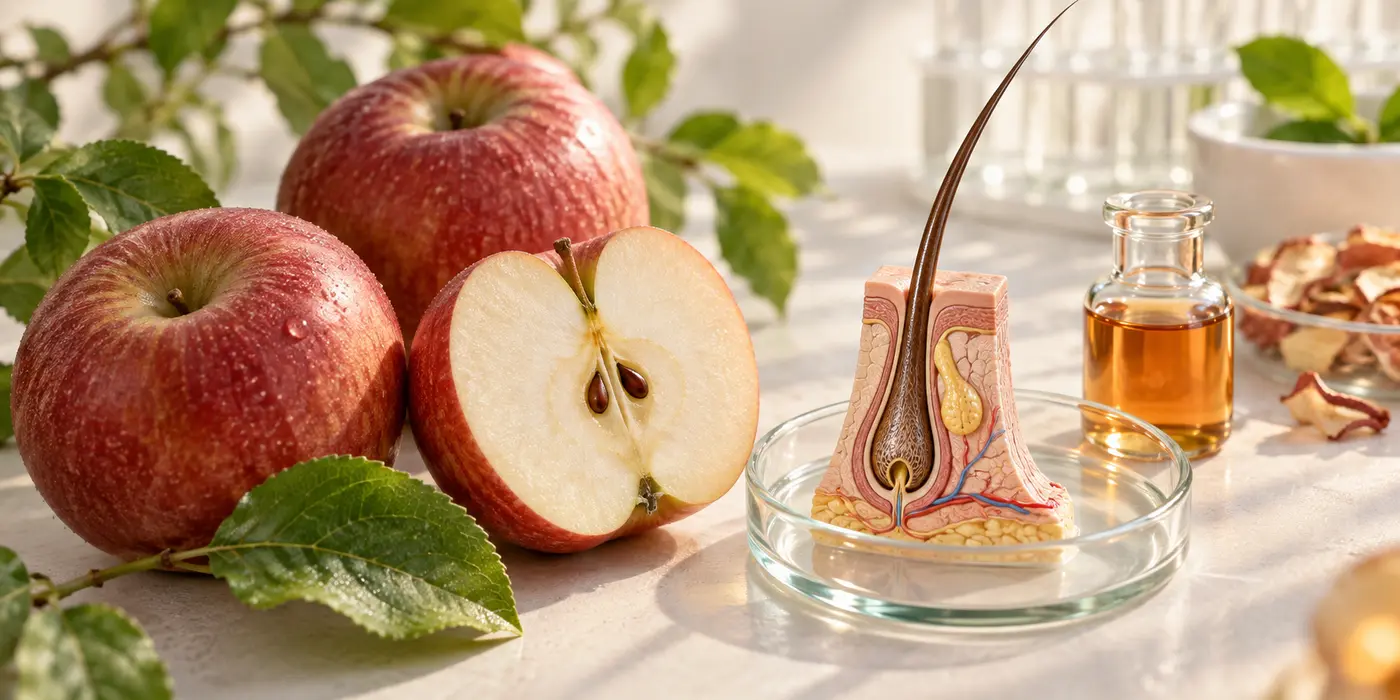
What makes procyanidin B2 interesting for hair research?
Procyanidin B2 is a polyphenol found in apples. In laboratory work, procyanidin oligomers protected cultured mouse hair epithelial cells against cell death triggered by TGF-beta1 and TGF-beta2. That offers a possible biological explanation to investigate, rather than evidence that eating apples or taking an extract reverses human hair loss. Read the hair-cell study abstract.
Did a topical apple compound change human hair counts?
A four-month, double-blind pilot trial enrolled 29 men: 19 used a 1% procyanidin B2 tonic and 10 used placebo. In the small measured scalp area of 0.25 cm², the average hair-count change was +3.67 hairs with procyanidin B2 versus −2.54 with placebo. The difference was statistically significant.
Mean hair diameter increased in 78.9% of the treatment group versus 30% of the placebo group. No adverse effects were observed in this small trial, which cannot establish long-term safety or equivalence to minoxidil. This was a topical tonic, not an oral supplement or rinse-off shampoo. Read the topical trial abstract.
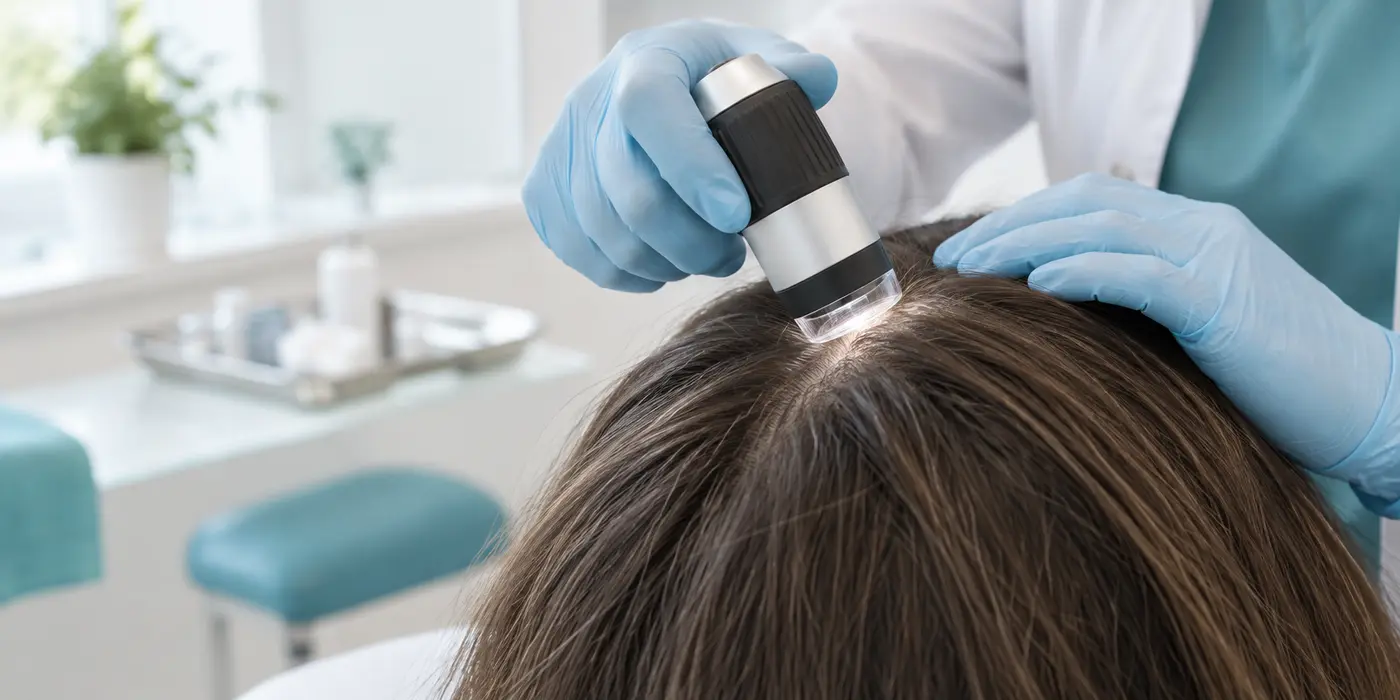
What did the oral Annurca AppleMets study find?
The 2018 paper enrolled 250 adults and compared two apple-extract formulations, one also containing biotin, selenium and zinc. Participants took placebo for four weeks, then active supplements for eight weeks. The authors reported increases in hair number, weight and keratin content during supplementation; their laboratory experiments also examined keratin expression in human skin cells. Read the full AppleMets paper.
Why does the order of placebo and treatment matter?
Everyone received placebo first. There was no group continuing placebo alongside the active-treatment period, so the reported changes cannot cleanly separate a supplement effect from time or other influences. Random assignment between two active formulas does not solve that problem. A published methodological critique also questioned the trial’s randomization and blinding claims. Read the published critique.
The formulation distinction matters when browsing products: an apple extract sold elsewhere is not automatically the AppleMets formulation, and an oral capsule is not the 1% topical tonic.
Related reading and product information: Annurca AppleMets research · Topical apple-polyphenol research · Applewise supplement facts · Applewise product listing. The listing is provided for ingredient information, not as a claim that this product was tested in these trials.