
Does Pumpkin Seed Oil Help Hair Grow?
Short answer: A small human trial reported increased hair counts after 24 weeks of a branded pumpkin-seed product. A later topical study also found changes in women with pattern hair loss. The formulation, route and comparison group matter when interpreting those results.
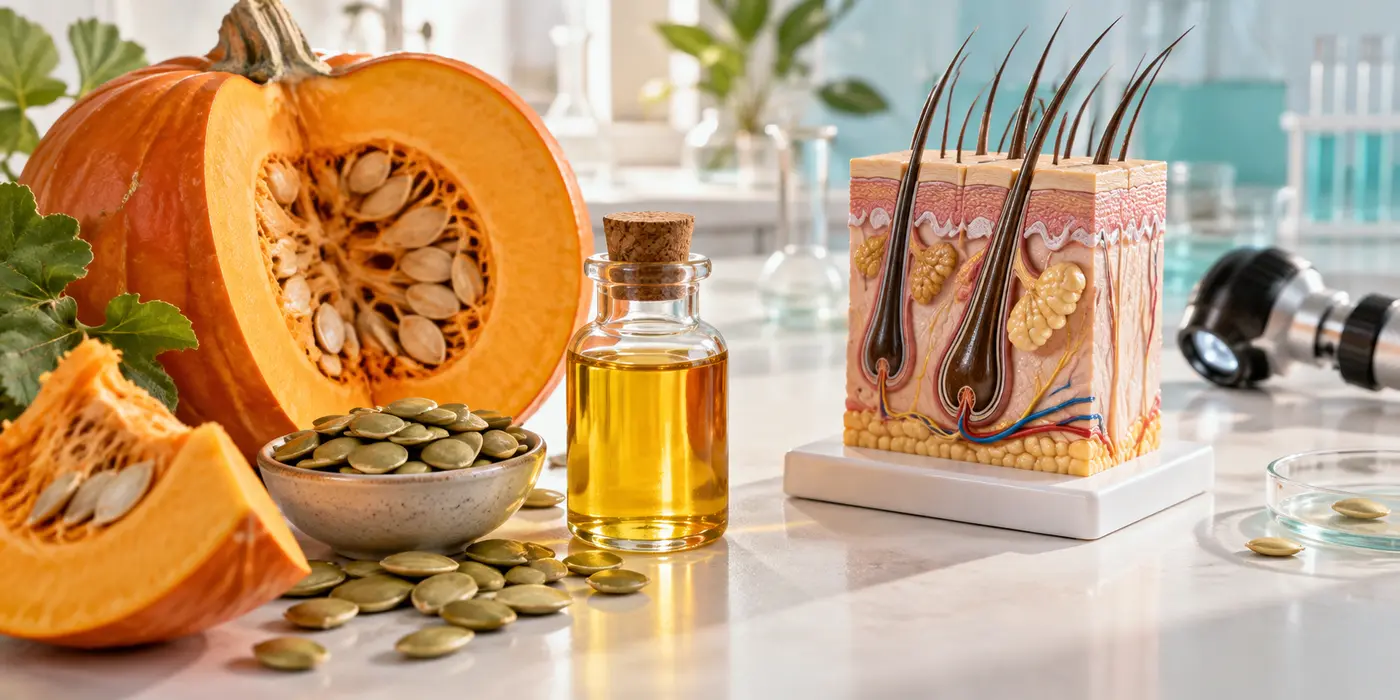
Did pumpkin-seed capsules increase hair counts in the 24-week trial?
Cho and colleagues randomized 76 men with mild-to-moderate androgenetic alopecia (AGA) to Octa Sabal Plus or placebo for 24 weeks. The paper described the intervention as 400 mg/day of pumpkin seed oil (PSO), supplied in branded capsules. Mean hair counts rose about 40% with the study product versus 10% with placebo, a statistically significant difference. Hair diameter did not differ between groups.
These are group averages, not a guarantee that each participant gained 40% more hair. The capsule supplier funded the study. DHT was not measured, so the trial did not establish whether blocking DHT explained the result.
Read the open-access Cho et al. primary study (full text and tables).
Can this result be attributed to pure pumpkin seed oil?
Not confidently. The trial report does not give a complete ingredient list, amounts for each component, or a batch assay. A manufacturer listing for Octa-Sabal Plus names octacosanol, pumpkin seed powder, mixed vegetable powder, evening-primrose powder, corn-silk extract, red-clover powder, and tomato powder. That listing is not peer-reviewed and does not prove the exact 2014 batch, but it is enough to avoid calling the tested capsule “straight PSO.” The evidence belongs to the branded formulation; it cannot show that an unbranded or culinary oil would produce the same result, or that pumpkin oil alone caused the change.
See the manufacturer/distributor product listing; its current formulation should not be treated as a verified 2014 trial label.
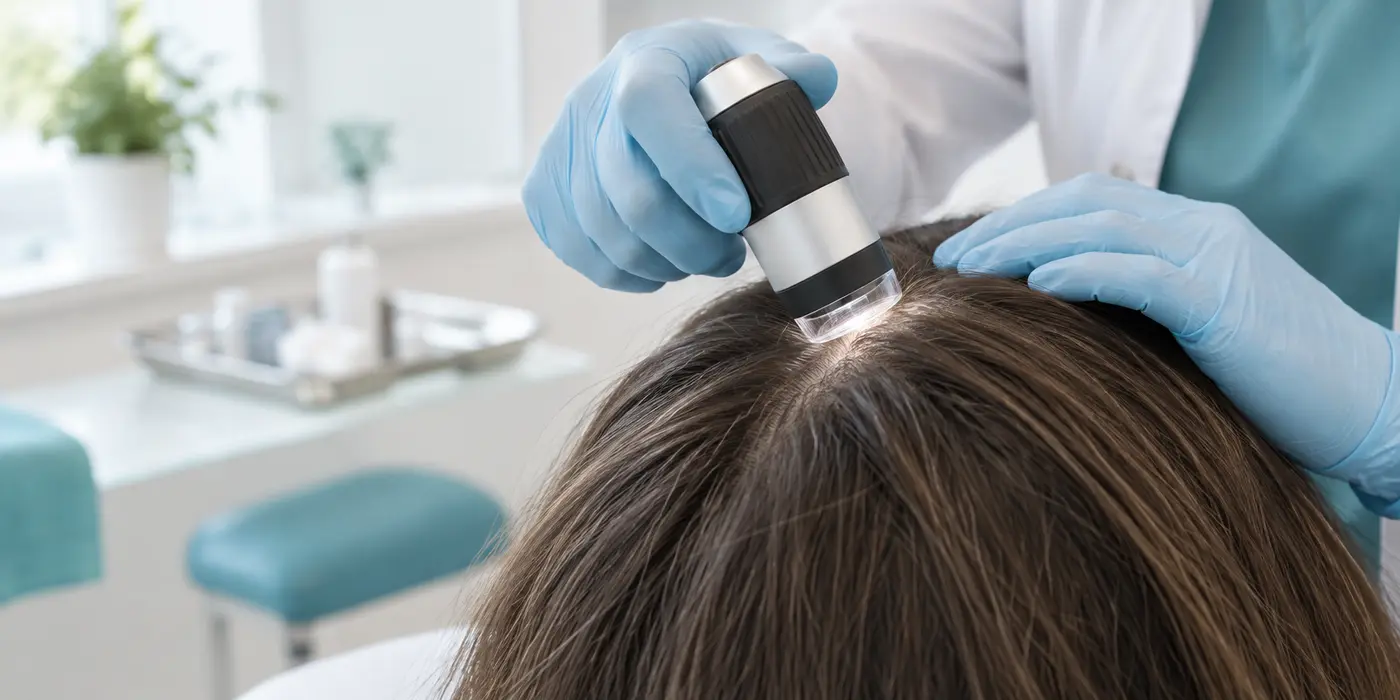
How did topical pumpkin seed oil compare with minoxidil in women?
A 2021 randomized study compared topical PSO with 5% minoxidil foam in 60 women with female pattern hair loss over three months. The pumpkin-oil group showed less variation in hair-shaft diameter, fewer fine vellus hairs and more upright regrowing hairs on scalp examination. Minoxidil produced larger changes on these measures.
This was a small, short study of a topical preparation—not the oral capsules from 2014. Its findings do not establish that the two treatments are equivalent or that a different supplement will reproduce either result.
See the PubMed record and publisher DOI for Ibrahim et al. (2021).
Related product information: Ultra Prostate Formula is a separate multi-ingredient product. It was not the intervention in either trial; its listing should not be read as evidence of equivalent hair-growth effects.