
Can Resveratrol and Green Tea Help Hair Growth?
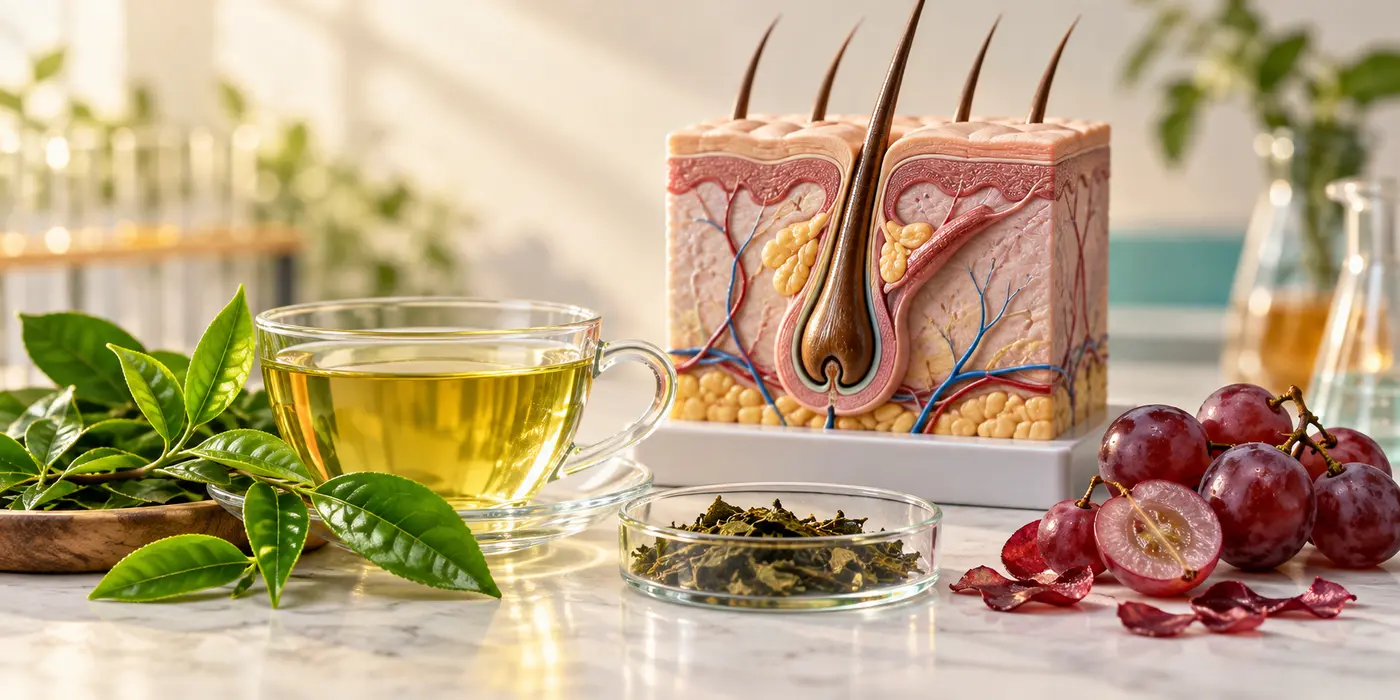
Short answer: Green tea’s EGCG and resveratrol have produced measurable hair-follicle findings in laboratory experiments. The intriguing part is where the evidence comes from: isolated mink follicles, cultured human follicles and cells—not a clinical trial of the two supplements together.
Did Green Tea’s EGCG Make Isolated Hair Follicles Grow?
In a 2018 study, researchers cultured hair follicles removed from male American minks for six days. EGCG increased shaft elongation at concentrations of 0.5–2.5 micromolar. At 0.5 micromolar, total growth averaged 31.25 micrometres, compared with 24.00 in controls—about 30% greater. At the highest tested concentration, 5 micromolar, growth instead fell to 17.97 micrometres.
EGCG also increased proliferation in isolated dermal papilla and outer-root-sheath cells. Blocking either the Sonic hedgehog (SHH) or AKT signalling pathway partly reversed these effects, suggesting that both contributed. The dose response is particularly revealing: more EGCG did not consistently produce more growth. These were direct exposures in culture; the experiment did not test drinking green tea. Read the full mink-follicle study.
Was the Original Resveratrol Study Actually About Hair?
The 2018 resveratrol paper used NIH3T3 mouse fibroblast cells to explore mechanisms relevant to scar formation after brain or spinal-cord injury. Resveratrol increased cell viability and activity of SHH-pathway proteins. Drugs blocking SIRT1 or SHH signalling reversed those effects, suggesting a connection between the pathways.
No hair follicles or hair-regrowth outcomes were tested. Its relevance here is the shared signalling pathway—a lead worth investigating, rather than a demonstrated hair treatment. Read the resveratrol fibroblast study.
Did Later Research Test Resveratrol on Human Hair Follicles?
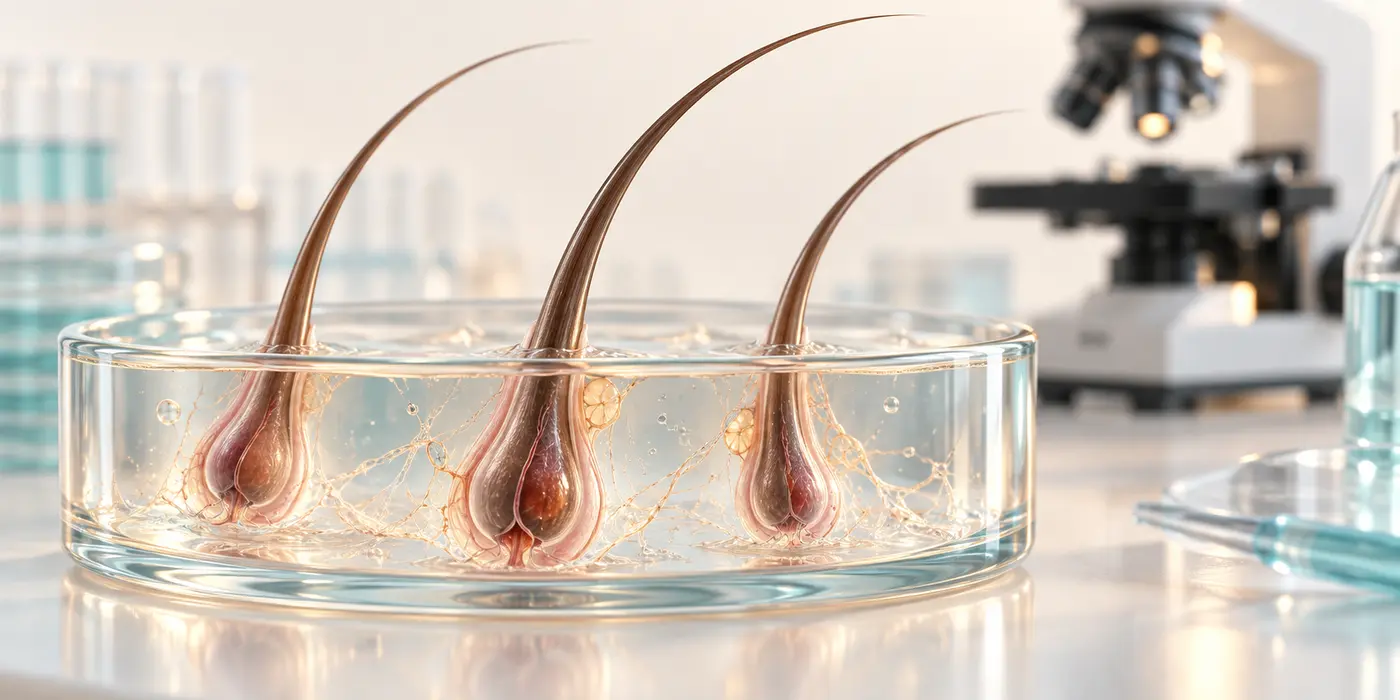
Yes. A 2021 study cultured follicles obtained from the back of hair-transplant patients’ scalps with resveratrol for six days. Treated follicles grew longer shafts and moved into the regression phase more slowly. At day six, approximately 78% remained in the active growth phase, compared with 19% of controls.
Separate experiments in the same paper found faster coat growth in mice given topical resveratrol and less peroxide-induced oxidative stress in cultured human dermal papilla cells. The human tissue makes this especially relevant to follicle biology, although those follicles were growing outside the body. The study did not measure regrowth in people taking resveratrol capsules or using a scalp product. Read the full 2021 resveratrol study.
Has EGCG Also Been Studied in Human Follicles?
A 2007 investigation reported increased growth of cultured human hair follicles and increased proliferation of human dermal papilla cells. Changes in growth and cell-survival signals offered a possible explanation for the response. This provides a human-tissue counterpart to the later mink experiments, while still leaving the clinical effectiveness of an oral supplement unresolved. Read the original human-follicle study.
For a closer look at that experiment, continue to our human green-tea hair-growth study review.
Related ingredients in our shop: Mega Green Tea Extract and Optimized Resveratrol Elite. These products were not the interventions tested in the follicle experiments.